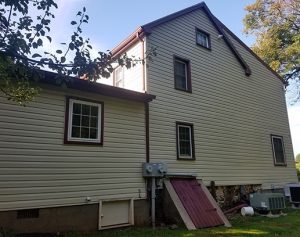

Vinyl siding is a great, low-maintenance choice for a home. It doesn’t need painting, and that saves you a lot of money as your house gets older. Except for one thing: the good ol’ vinyl siding oxidation problem.
No product that lives outside in the sun, rain and Pennsylvania weather stays perfect forever. We’ve been washing homes around Lebanon, Lancaster, Lititz, Ephrata and Palmyra since 2002, and oxidation is one of the things I get asked about most. A lot of people don’t know what it is until they notice it, so I want to share what I’ve learned.
What Is Vinyl Siding Oxidation?
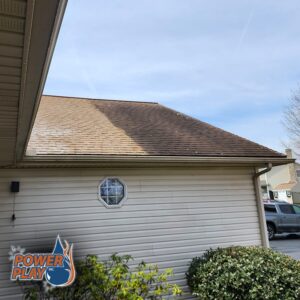
Oxidation is the chalky, whitish film that shows up on vinyl siding as it ages. The sun’s UV rays slowly break down the very top layer of the vinyl. Once that happens, that thin outer layer is basically failed or “dead” plastic, and it sits on the surface as a powdery haze.
You’ll often see it as:
- A slightly white or faded haze over the whole house
- Color that looks washed-out compared to when the siding was new
- A big color difference in protected spots. Look at the siding under a porch roof or behind a shutter and you’ll sometimes find almost a completely different color. That’s because the sun hasn’t hit those areas as hard.

Believe it or not, we see siding as new as five years old starting to oxidize. Darker colors and walls that get full afternoon sun tend to show it sooner.
How to Test for Oxidation: The Rub Test
There’s a simple way to check your own siding:
- Wet your finger, or grab a damp Mr. Clean Magic Eraser.
- Rub a small, dry area of siding on a sunny side of the house.
- Look at your finger and the spot you rubbed.
If a white or cream-colored residue comes off, and the spot you rubbed looks like a deeper, richer color than the area around it, your siding has started oxidizing, or is well along in the process.
Why Harsh Pressure Washing Makes It Worse
This is the big one. Washing a house does not remove oxidation. We even include that in our terms and conditions, because over the years a small number of customers have thought our soap or washing caused it. It doesn’t. The oxidation was already there. Sometimes a clean house just makes it easier to see.
What can make it look worse is high pressure. When someone hits oxidized siding with a strong stream, the wand cuts into that chalky layer in some spots and not others. Once it dries, you get stripes and wand marks all over the house. We’ve seen plenty of homes washed that way, and it looks terrible.
That’s a big reason we soft wash. With low pressure and the right cleaning solution, we disturb that oxidized layer as little as possible while still killing and removing the mold, mildew and dirt.
There is one honest exception. If a home has heavy growth, like lichens or those round, crusty mold spots, sometimes a little more pressure up close is the only way to get them off. That can cut into the oxidation and leave the dry-out a little uneven. It’s another good reason to keep up with house washes so we can do a 100% soft wash every time. Most of our customers wash every two or three years, but that’s a personal preference.
You might also notice the outline of a shrub you pulled out, since the plant shaded that siding from the sun, or badly oxidized siding drying a little unevenly after a wash. Here’s the good news: in most of these cases, the sun evens it all out within several months. I know that isn’t what people want to hear, but it’s the truth, and it’s often the best answer.

Can Cleaning Fix It, or Is It Time to Paint or Replace?
You’ve got a few real options, and it depends on how bad the oxidation is and what you want.
1. Leave it and keep it clean. For light oxidation, a gentle soft wash every couple of years keeps the house looking good without making the oxidation worse.
2. Oxidation removal. There’s a cleaner made to remove oxidation. It has to be scrubbed onto the siding by hand, so it costs more in product and labor than a regular house wash. We’re happy to do it, but I usually don’t recommend it on its own. Once that dead layer is gone, the sun starts working on the fresh surface right away, and you’ll typically see oxidation again within a year or so.
3. Oxidation removal plus a protective coat. This is the option I like best for siding that’s oxidized but otherwise in good shape. After the oxidation is removed, a product called Vinyl Renu can be sprayed on. It puts a clear protective coat back on the siding, brings back the original color, and protects it for years. It isn’t cheap, but it costs much less than replacing your siding.
4. Painting. Vinyl siding can be painted with the right vinyl-safe paint, and it’s a good way to change or refresh the color. Color choice matters, because going much darker than the original can cause vinyl to heat up and warp. We also offer painting and can talk through whether it makes sense for your home.
5. Replacement. If the siding is cracked, brittle, warped or coming loose, no cleaning or coating will fix that. At that point replacement is the honest answer.
How to Prevent Oxidation (or Slow It Down)
You can’t stop the sun, but you can slow things down:
- Skip high pressure. Soft washing protects the surface instead of stripping it.
- Avoid harsh scrubbing and strong chemicals on your siding.
- Wash on a schedule. Regular soft washing keeps growth from building up to the point where pressure is needed.
- Consider a protective coat like Vinyl Renu once the siding is cleaned up.
Frequently Asked Questions
Will a house wash remove oxidation?
No. Washing removes dirt, mold and mildew, but not oxidation. Oxidation needs a special cleaner that’s scrubbed on by hand.
Did my house wash cause the oxidation?
No. Oxidation comes from years of UV exposure. A clean house can make it easier to see, and high-pressure washing can make it look streaky, which is why we soft wash.
How do I know if my siding is oxidized?
Do the rub test. If a wet finger picks up a white or chalky residue and the spot looks darker afterward, it’s oxidized.
Let’s Talk About Your Siding
If you think your siding is oxidized and it’s bothering you, reach out. I’m happy to take a look and go over your options and pricing honestly. We serve homeowners across Lebanon, Lancaster, Dauphin and Berks counties, from Myerstown to Hershey, Hummelstown and Reading. Power Play is fully insured, registered as PA Home Improvement Contractor #PA062176, and backed by more than 350 five-star Google reviews.
Call 717-314-2360 or request your free estimate. You can also see all our services here.