
Ask ten people how to clean a house and most of them will say “power wash it.” It makes sense. Strong water blasts dirt off, and it’s satisfying to watch. But after more than twenty years of cleaning homes around Lebanon, Lancaster, Hershey and Reading, we can tell you that high pressure is not the right tool for every surface. On some parts of your home it does more harm than good.
Here’s a plain explanation of the difference between soft washing and power washing, where each one belongs, and what we use on your home.
What Is Soft Washing?
Soft washing uses low pressure plus cleaning solutions to do the work. Instead of blasting grime off, we apply a cleaning mix that breaks down dirt and kills the mold, mildew and algae growing on the surface. Then we rinse it away gently.
The key is that the solution does the cleaning, not the force of the water. That matters because the green and black stuff on your siding or roof is alive. If you only blast it with water, you knock off what you can see, but the growth that’s left behind comes back quickly. When it’s actually killed, it has to start over from scratch, and the clean lasts a lot longer.
Soft washing is what we use for:
- Vinyl and aluminum siding
- Painted and stained surfaces
- Stucco and Dryvit-style finishes
- Asphalt shingle roofs
- Gutters, soffits and trim
What Is Power Washing?
Power washing (or pressure washing) uses higher-pressure water to physically strip dirt, grime and stains off hard surfaces. It’s the right tool when the surface can take it and the dirt is ground in.
Power washing is what we use for:
- Concrete driveways, sidewalks and patios
- Pavers and stone
- Some decks and fences, with the pressure matched to the material
- Prep work before staining or sealing
Even here, more isn’t always better. Wood can fuzz or gouge if the pressure is too high or the tip is too close, so we adjust for the surface in front of us.
The Risks of High Pressure on Siding and Shingles
This is the part most people don’t hear until something’s already damaged. High pressure on the wrong surface can:
- Force water behind siding. Vinyl siding is designed to shed rain falling down, not water sprayed up and under the laps. That water can end up in the wall behind it.
- Leave wand marks. On older or oxidized vinyl, high pressure can cut stripes into the surface that show once it dries.
- Crack or loosen siding. Older vinyl gets brittle with age and can crack under a strong stream.
- Strip paint and damage trim. Painted wood, window seals and caulk don’t hold up well to a hard spray.
- Knock granules off shingles. Those granules protect your roof from the sun. Blasting a shingle roof can wear it out faster and cause damage you won’t see until later.
- Spread mold instead of killing it. Water alone moves spores around without killing them.
If you’ve ever seen a house with streaks of “clean” and “not clean” running across the siding, that’s often what high pressure leaves behind.
What Power Play Uses Where
We match the method to the surface. Here’s how it usually breaks down on a typical job in Lititz, Palmyra or Ephrata:
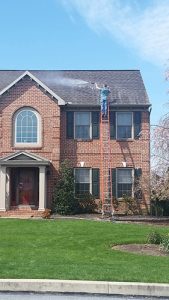
- House washing: soft wash. Our house washing uses low pressure and cleaning mixes made to kill and remove mold and mildew. We use plant-safe, biodegradable products and take care around your landscaping.
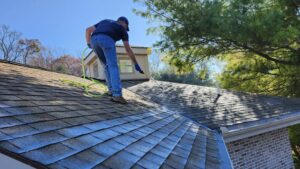
- Roof cleaning: soft wash only. Black streaks on shingle roofs are usually algae. Our roof cleaning kills it without blasting your shingles. We never pressure wash a shingle roof.
- Concrete, pavers and walkways: power washing, often followed by sealing if you’d like it protected.
- Decks and fences: it depends on the material. Composite and vinyl usually get a gentler cleaning. Wood may get pressure matched to its condition, especially before staining.
- Windows: cleaned separately with a water-fed pole, not blasted.
A Note on Roofs
Roofs deserve their own mention because the damage from pressure washing them is easy to miss. Granules come off, the shingles look clean for a while, and then they age faster. If your roof is faded and dry rather than just dirty, a cleaning alone won’t change that. That’s where soy roof rejuvenation comes in. You can read how it works on our Lebanon and Lancaster County roof rejuvenation pages.
Frequently Asked Questions
Is soft washing as effective as power washing?
On siding and roofs, yes, and usually better. The cleaning solution kills the growth instead of just knocking it off, so the clean tends to last longer.
Can I pressure wash my own vinyl siding?
You can, but be careful. Keep the pressure low, don’t spray upward under the siding laps, and keep the tip well back from the surface. If the siding is chalky or older, high pressure can leave marks.
Is soft washing safe for my plants and pets?
We use plant-safe, biodegradable products and take steps to protect your landscaping. We’ll walk you through what we do before we start.
How often should I have my house washed?
Most of our customers wash every two or three years, but it depends on shade, nearby trees and how much growth builds up.
Get the Right Clean for Your Home
Whether you’re in Lebanon, Lancaster, Hummelstown, Myerstown or Reading, we’ll look at your home and recommend the method that’s right for each surface. Power Play has served Lebanon, Lancaster, Dauphin and Berks counties since 2002. We’re fully insured, registered as PA Home Improvement Contractor #PA062176, and backed by more than 350 five-star Google reviews.
Call 717-314-2360 or request your free estimate. See all of our services on our services page.